Home Products
All formats
Custom About Us Contact Us Blog info@qicaipress.com Get a Quote

Products — Children's Books

Books that survive small hands.

Picture books, board books, early readers and activity books — printed with soy-based inks, die-cut with rounded corners, and supported by CPSIA and EN71 lab testing for US and EU retail. Factory-direct from Guangzhou since 1995.

Soy-BasedNon-toxic inks
CPSIA · EN71Testing supported
RoundedDie-cut corners
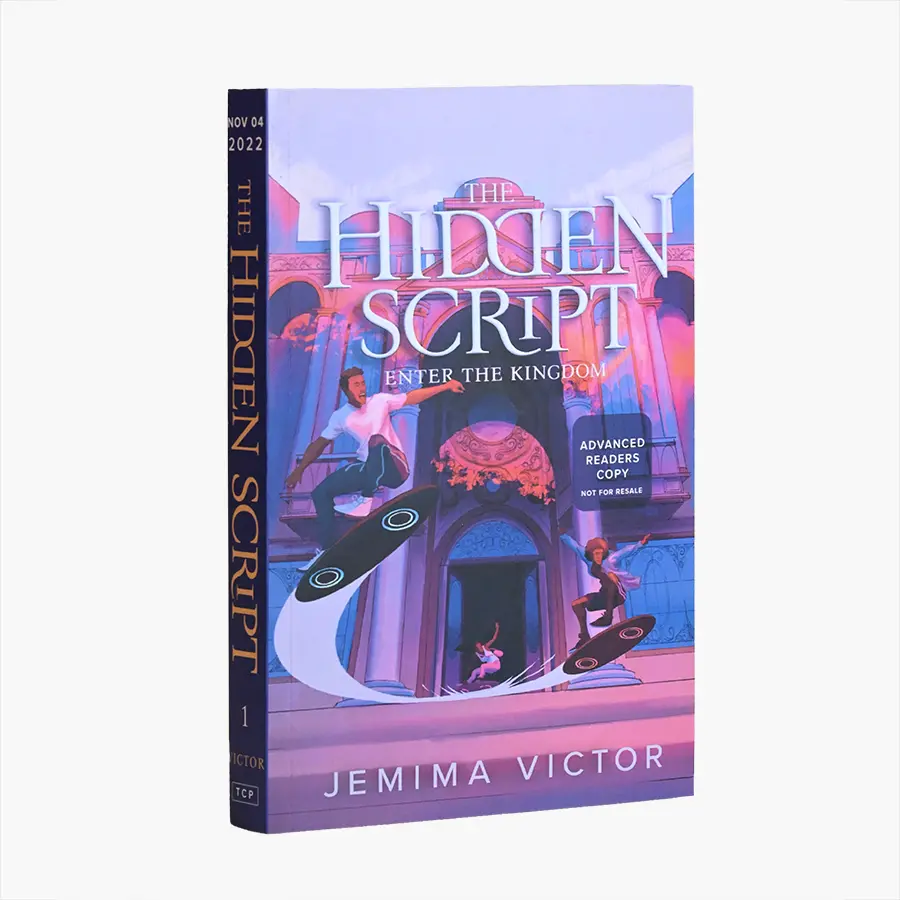
Colorful illustrated middle-grade book cover with detailed fantasy artwork
Soy-BasedNon-toxic inks
CPSIA · EN71Lab testing arranged
RoundedCorner die cutting
3–5 DaysPhysical proofing
15–25 DaysProduction & packing
What we build

Every age, every format.

From first board books to middle-grade series, each format has its own construction rules. Select one to see it.

The details

Built for readers who bite.

A children's book is judged by parents, retailers and safety labs before a child ever opens it. These are the parts we control in-house.

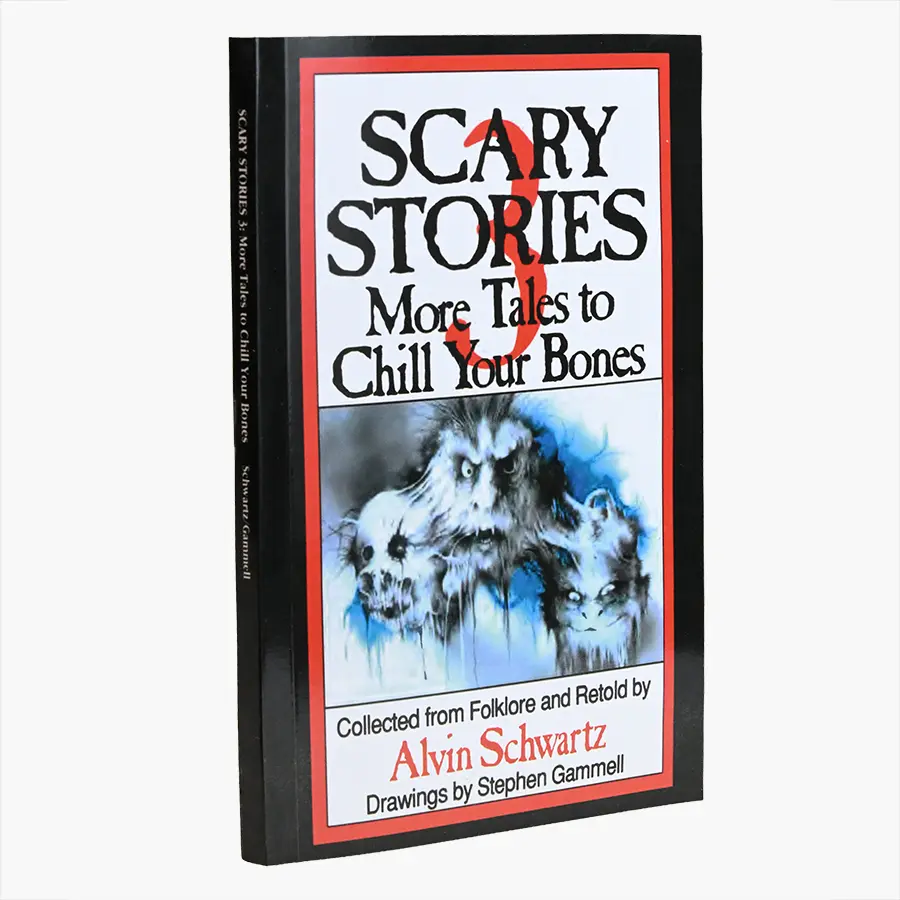
Full-color illustrated children's book cover
Full-color illustrated coverOffset consistency
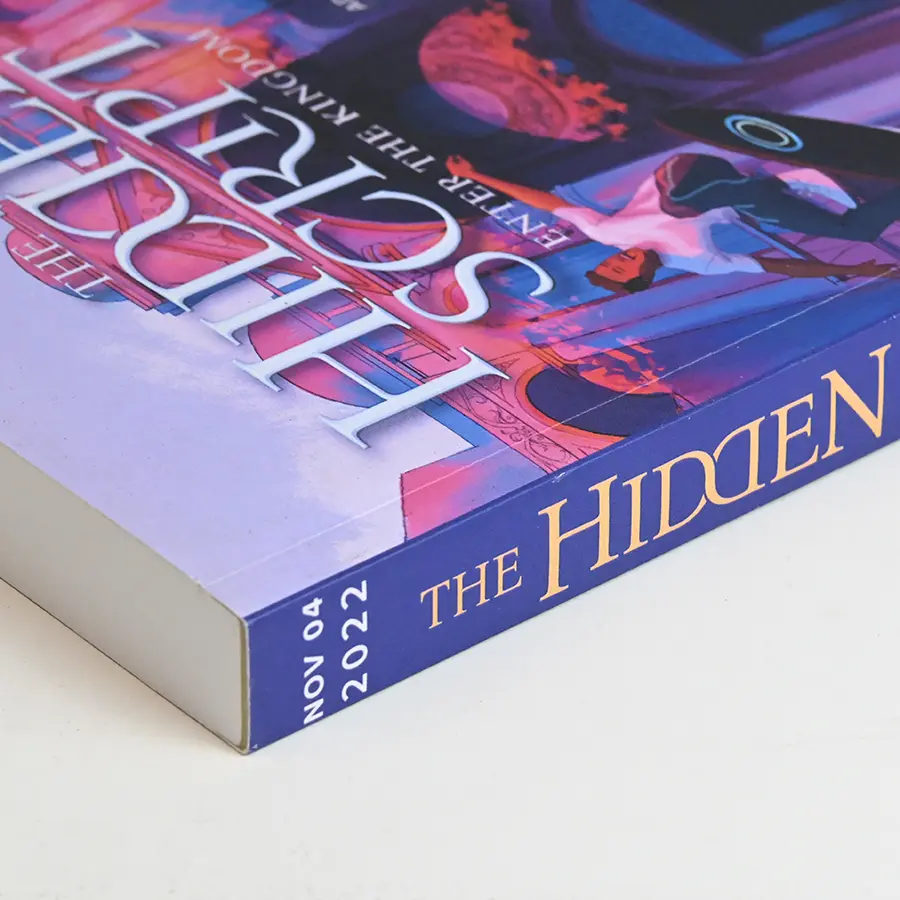
Close corner and spine detail of a full-color illustrated children's book
Corner & spine, close detailClean trim & lamination
Illustrated chapter book with bold cover typography
Chapter book coverText & art, one press
01

Board book construction

Printed sheets laminated to rigid board, page by page, with sturdy hinges that survive being opened backwards — the usual direction.

02

Rounded corners

Die-cut rounded corners on board and picture books — no sharp points near small faces, and edges that wear evenly instead of fraying.

03

Soy-based inks

Non-toxic soy-based inks as standard on children's titles, holding the bright, flat color fields that picture-book art demands.

04

Anti-scuff lamination

Matt anti-scuff lamination for covers that meet sticky fingers daily — wipeable, and resistant to the marking that plagues dark solids.

05

Smyth sewn picture books

Sewn blocks so a favorite spread can be opened flat a thousand times without pages parting from the spine.

06

Cover finishes

Foil, spot UV and emboss used sparingly and safely — a title that catches light on the shelf without loose parts or sharp edges.

07

Printed endpapers

Endpapers treated as story real estate — maps, patterns and character art that start the book before page one.

08

Safety testing coordination

Third-party lab testing arranged for CPC (US retail) and EN71/CE (EU). We coordinate the labs and samples; certificates issue to you.

The author-publisher moment

Picture books have gone independent.

Self-published picture-book authors and Kickstarter children's projects now account for a steady share of what leaves our bindery. Print-on-demand made publishing easy, but its color varies copy to copy — and a picture book lives or dies on its color. That is what pushes authors to offset.

We produce these runs factory-direct: a bound dummy for read-aloud testing before launch, then a run with every copy matched to the approved proof.

Request a prototype dummy

Author-publishers

Writers and illustrators bringing their own titles to market, with our prepress team covering the production side.

Crowdfunded projects

A physical dummy before the campaign, production locked to your fulfilment window, packing by pledge tier.

Offset color consistency

Every copy pulled from the same approved sheet standard — the consistency print-on-demand cannot promise.

Read-aloud dummies

A prototype in 3–5 days to test with real children — pacing, page turns and durability — before you commit to the run.

Questions

Before you ask for a price.

Safety testing, page counts and the format decisions that move a children's book quote.

CPSIA, EN71 and safety testing

How to choose book paper

Printing in China: when it pays off

Who arranges CPSIA and EN71 testing?

We do. Production samples go to accredited third-party labs for CPSIA testing (required for a CPC to sell children's books at US retail) or EN71 for the EU. We coordinate the labs, samples and timing; the certificates issue in your name, since you are the importer of record.

Why do board books cost more per page?

Each board book page is a printed sheet laminated to rigid board and assembled by hand and machine — closer to case-making than to printing a text page. A 24-page board book therefore costs more than a 32-page picture book. The trade is durability: board books outlive their first reader.

Why must my page count be a multiple of eight?

Offset presses print in signatures — folded sheets of 8 or 16 pages — so 24, 32 and 40 pages bind cleanly while 30 wastes paper. Picture books can also be self-ended, where the first and last pages double as endpapers, saving a little cost; separate endpapers give you two extra design surfaces instead.

What should my illustrator know about bleed and gutter?

Artwork that reaches the page edge needs 3mm of bleed beyond trim, and nothing critical within 5mm of it. At the gutter, keep faces and text away from the fold — even a sewn book curves slightly at the spine. We supply templates for your exact trim before illustration begins.

What is a realistic minimum quantity?

Runs typically start from a few hundred copies; board books, with their assembly work, reward slightly larger runs. Offset setup is a fixed cost, so unit price falls quickly as quantity rises. We quote several quantities side by side, and will say plainly if your numbers suit digital printing better.

How long does everything take, including testing?

Proofing takes 3–5 days and production 15–25 days after approval. Lab testing runs on early production samples, largely in parallel with the run, and typically adds one to two weeks before shipment. We schedule backwards from your launch date and tell you the honest critical path.
Tell us about your book.

Format, trim size, page count and quantity — or just what you know so far. A factory quote comes back within 24 hours.

info@qicaipress.com

Files are handled in confidence. Dies and tooling are kept for your reprints.